Initiatives

From environmental questions to informed action.

Environmental challenges require more than awareness. They require evidence, participation, dialogue and sustained engagement. At Environmental Justice Forum, our initiatives bring together students, young people, experts, citizens and institutions to understand environmental issues, strengthen public participation and contribute to informed environmental action.

01 - Student Outreach

Building the next generation of environmental stewards.

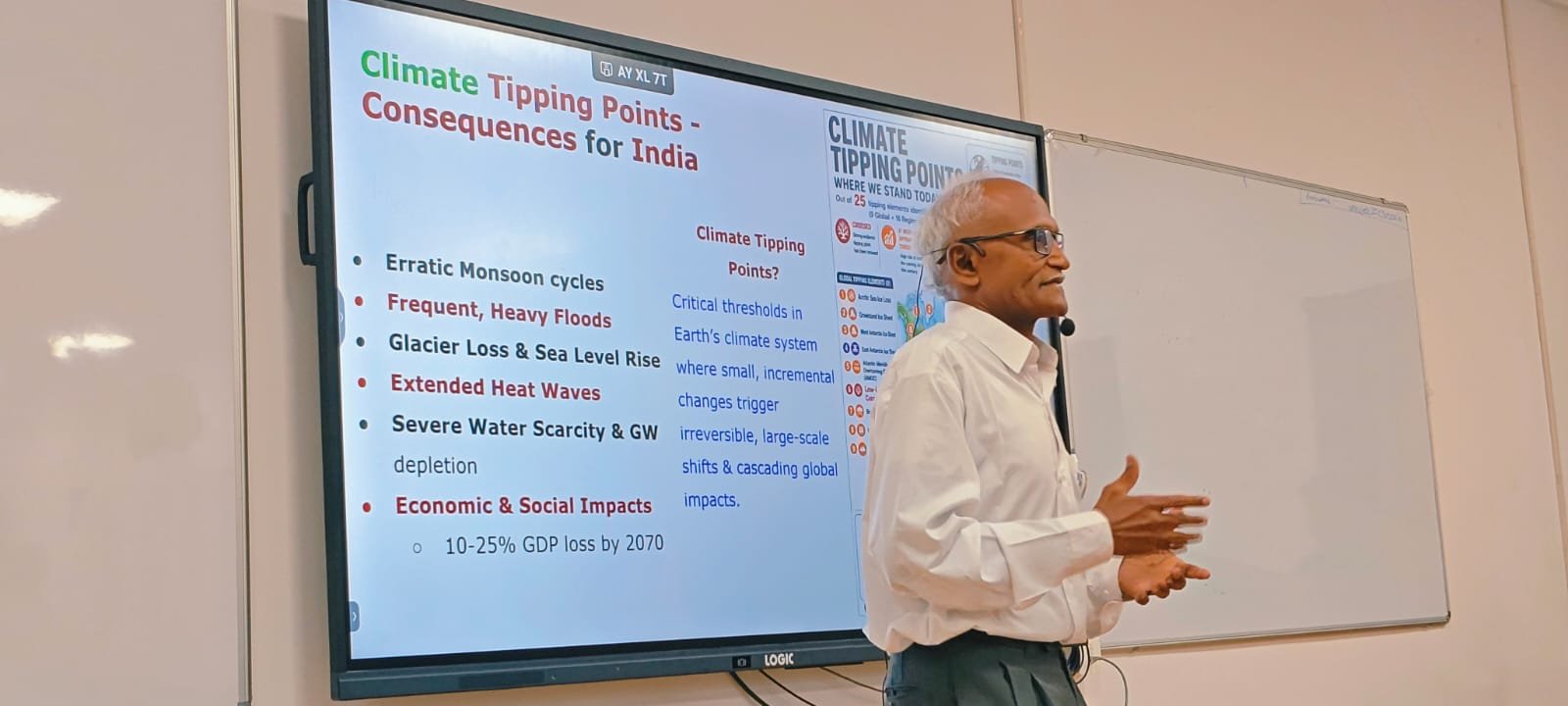
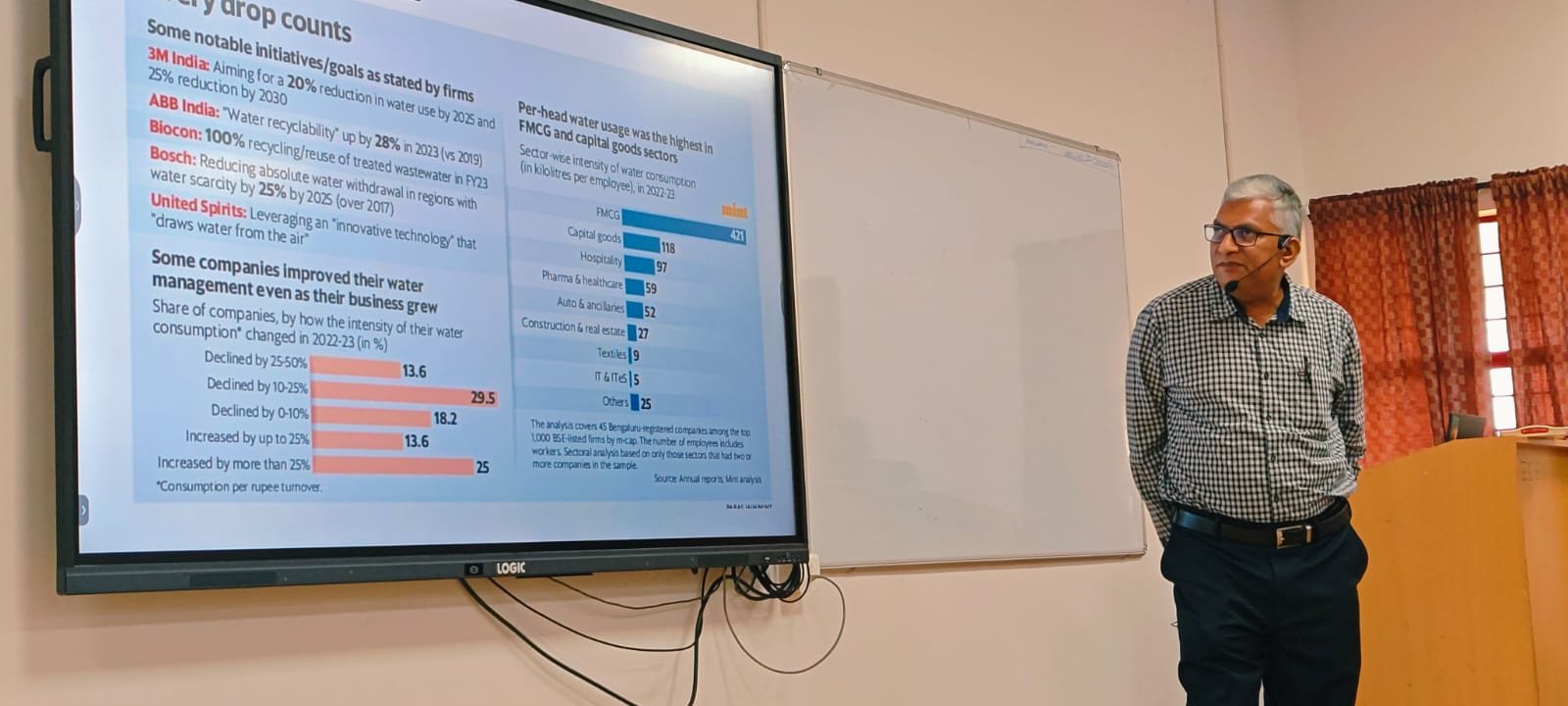
Students and young people have an important role to play in shaping how society understands and responds to environmental challenges. EJF seeks to create meaningful opportunities for students and young people to move beyond classroom learning and engage with environmental issues around them.

Through outreach activities, discussions, learning programmes, expert interactions and research opportunities, we aim to encourage students to become informed participants and active environmental stewards.
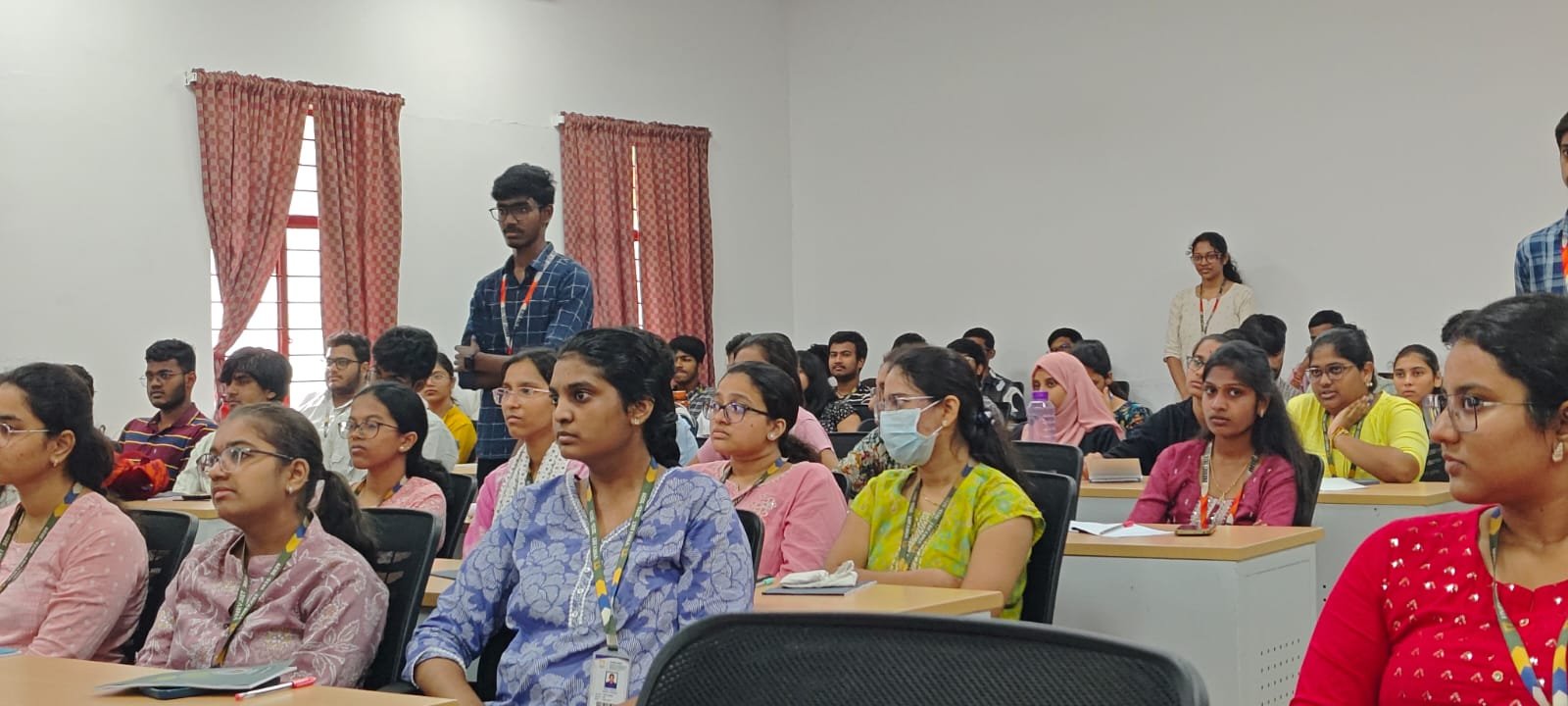
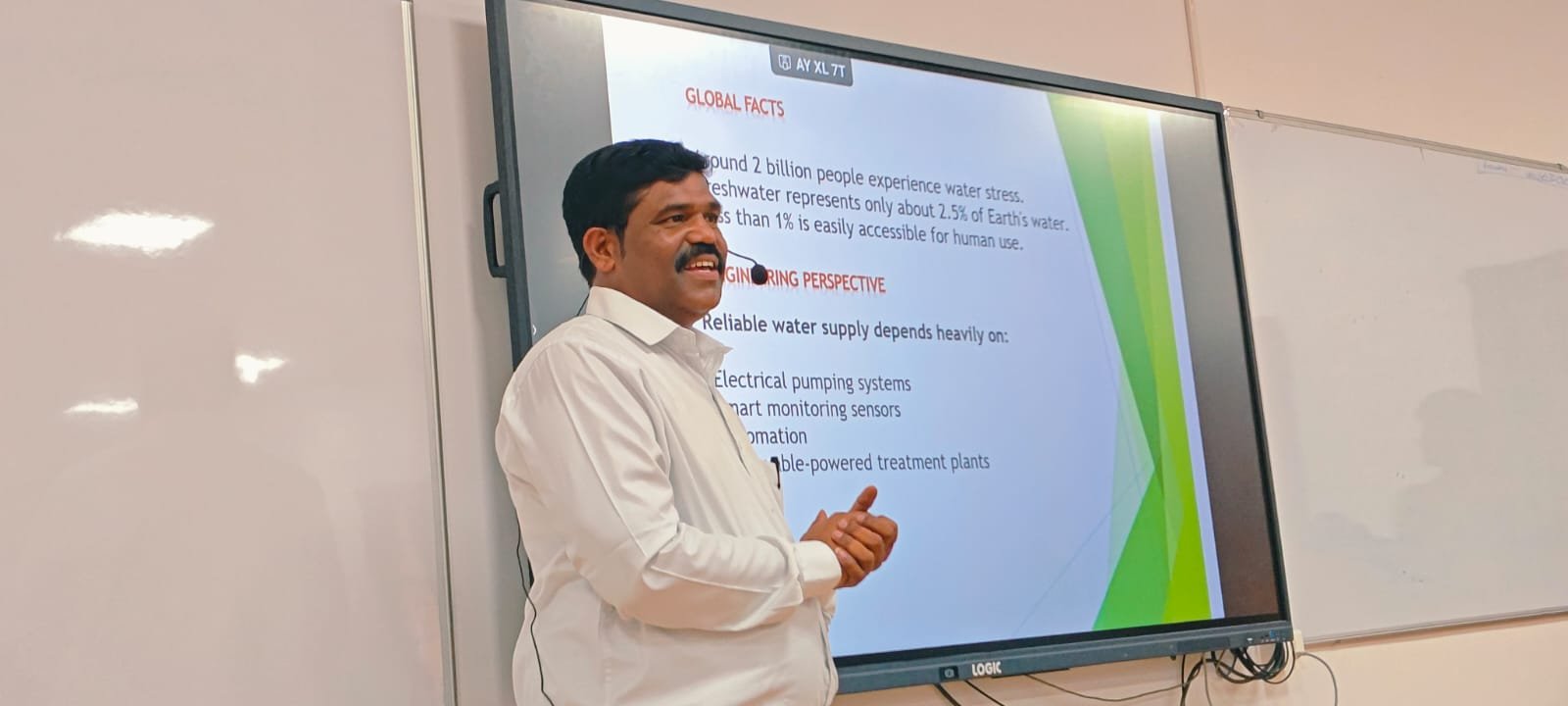
Students engaged in an EJF outreach session Speaker presenting at an EJF outreach session EJF outreach session with students Speaker discussing environmental topics at an EJF session

What We Do

Environmental Learning
Creating opportunities to understand environmental issues through discussions, educational activities and accessible resources.
Expert Engagement
Connecting students and young people with environmental experts, researchers and practitioners.
Environmental Discussions
Creating spaces where students can ask questions, exchange perspectives and engage with real-world environmental challenges.
Research Opportunities
Connecting students with environmental problems that can be explored through structured research projects.

What We Have Done

~270
Students engaged
2
Institutions reached
2
Sessions / programmes
2026
Since

What's Next - Taking student engagement from awareness to research and action.

EJF is developing opportunities through which students can work on real environmental problems in and around their communities. Students will be able to explore identified environmental problems, understand the research question, propose an approach and, where appropriate, work with technical guidance to develop evidence about the issue.

Identify a Problem → Apply → Research → Build Evidence → Explore Action

02 - Technical & Evidence Advocacy

Making environmental evidence understandable and useful.

Environmental issues can involve complex scientific, technical and policy questions. Yet the ability to understand these issues should not be limited to specialists. EJF works to examine environmental concerns through available evidence, research and technical understanding, and communicate that knowledge in ways that are accessible to citizens, students and stakeholders.

What is happening?
Understanding the environmental issue and the evidence behind it.
Why does it matter?
Examining its environmental, social and, where relevant, economic implications.
What can be done?
Exploring possible interventions, responses and pathways for further action.

Our Technical Work

Technical Briefings
Concise explanations of important environmental issues based on available evidence.
Issue Analysis
Exploring the scientific, technical and environmental dimensions of emerging concerns.
Data & Evidence
Bringing relevant information together to improve understanding of environmental problems.
Public Communication
Translating complex environmental information into accessible resources for citizens and stakeholders.
From Evidence to Understanding
Research & Data
Technical Understanding
Accessible Communication
Public Understanding
Informed Engagement

03 - Policy Advocacy

Bringing evidence and public concerns into environmental decision-making.

Environmental decisions affect communities, ecosystems and future generations. EJF seeks to contribute to environmental decision-making by documenting concerns, communicating evidence and engaging with relevant institutions and departments through informed representations and constructive dialogue. Our policy advocacy work focuses on creating a documented pathway between an environmental concern and the institutions responsible for understanding or addressing it.

How Our Policy Advocacy Works

01
Identify
Recognising an environmental concern or issue that requires attention.
02
Understand
Examining available evidence, information and relevant context.
03
Document
Developing a clear representation or communication outlining the concern and supporting evidence.
04
Engage
Submitting the representation to the relevant department, authority or institution.
05
Follow Up
Tracking responses, seeking clarification where necessary and continuing the dialogue.
06
Document the Outcome
Maintaining a record of representations, responses and subsequent action where available.
Public Record of Representations
In keeping with our commitment to transparency, EJF maintains a public record of the representations, letters and formal communications it has submitted to institutions, departments and authorities on environmental issues. Each document below is available to view and download.
Approach Paper - Musi River Rejuvenation (Satyagraha)
29.4.2026
Representation on Food Adulteration
09.06.2026
Letter to Jayesh Ranjan - CURE Bill Feedback Process
-
Letter to Principal Secretary (Labour) - Sigachi Industries Explosion
-
Letter to Chief Minister - Review of Riverfront Project
24.3.2026
Letter from CSOs to Chief Minister, Telangana - KBR Park Flyovers
23.5.2026
Letter to Asian Development Bank on Musi
03.05.2026
Representation on Hyderabad Urban Mobility Plan
[ADD DATE]
Formal Objection - BPCL Petro Complex Foundation Stone, Nellore, AP
[ADD DATE]
Letter to SEIAA on SEAC Minutes of Meeting
03.07.2026
Letter on Data Centres, Telangana
10.5.2026
Letter to SEIAA Chairman
27.04.2026
Status
Submitted Acknowledged Response Received Follow-up Ongoing Resolved

Participation Matters

Environmental decision-making should include the people affected by environmental issues. EJF also seeks to encourage informed public participation around environmental concerns. Where opportunities for public representations or collective participation arise, we will provide relevant information so that citizens can better understand the issue and participate meaningfully.

04 - EJF Roundtables

Bringing people together to understand environmental challenges.

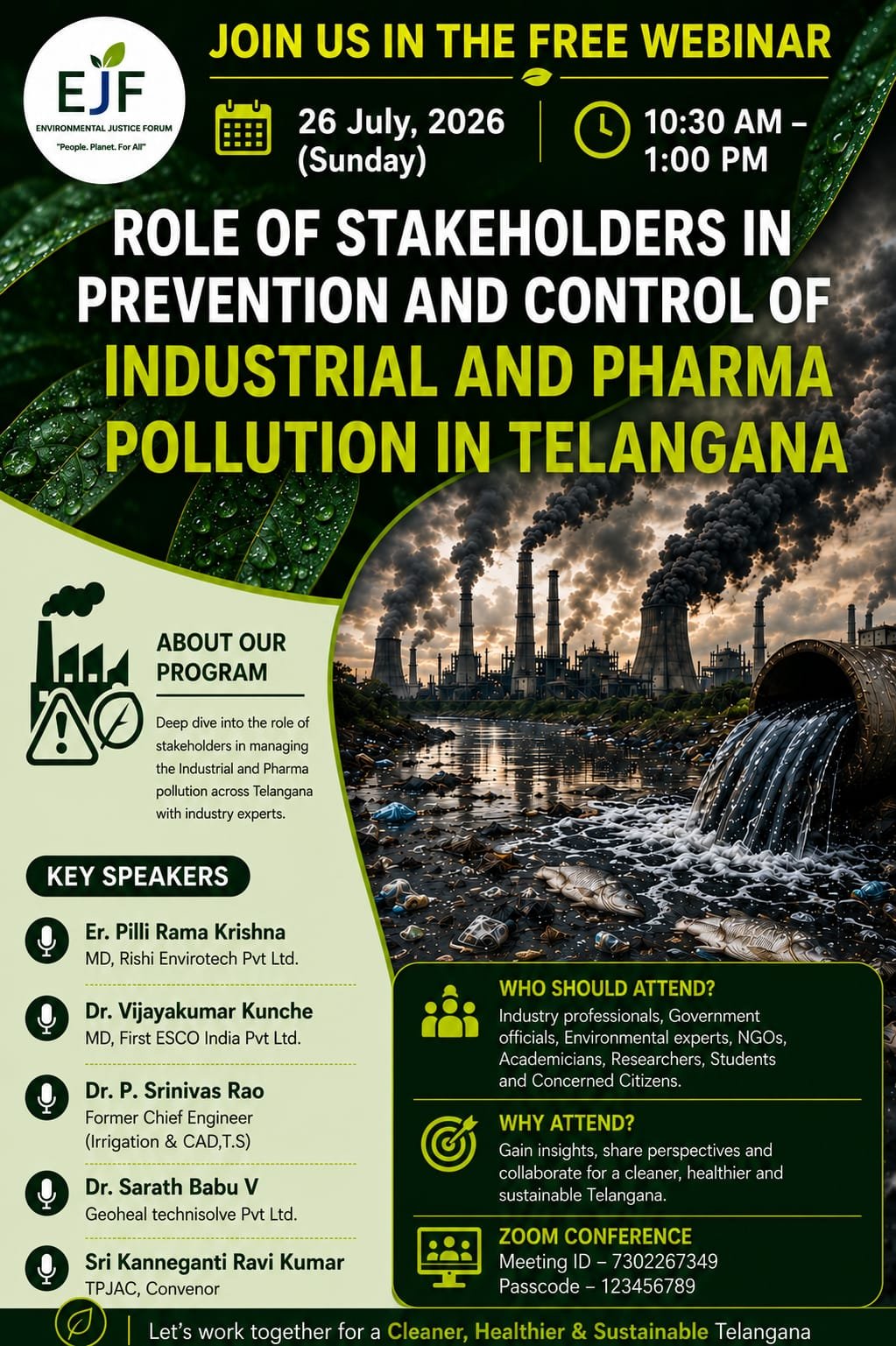
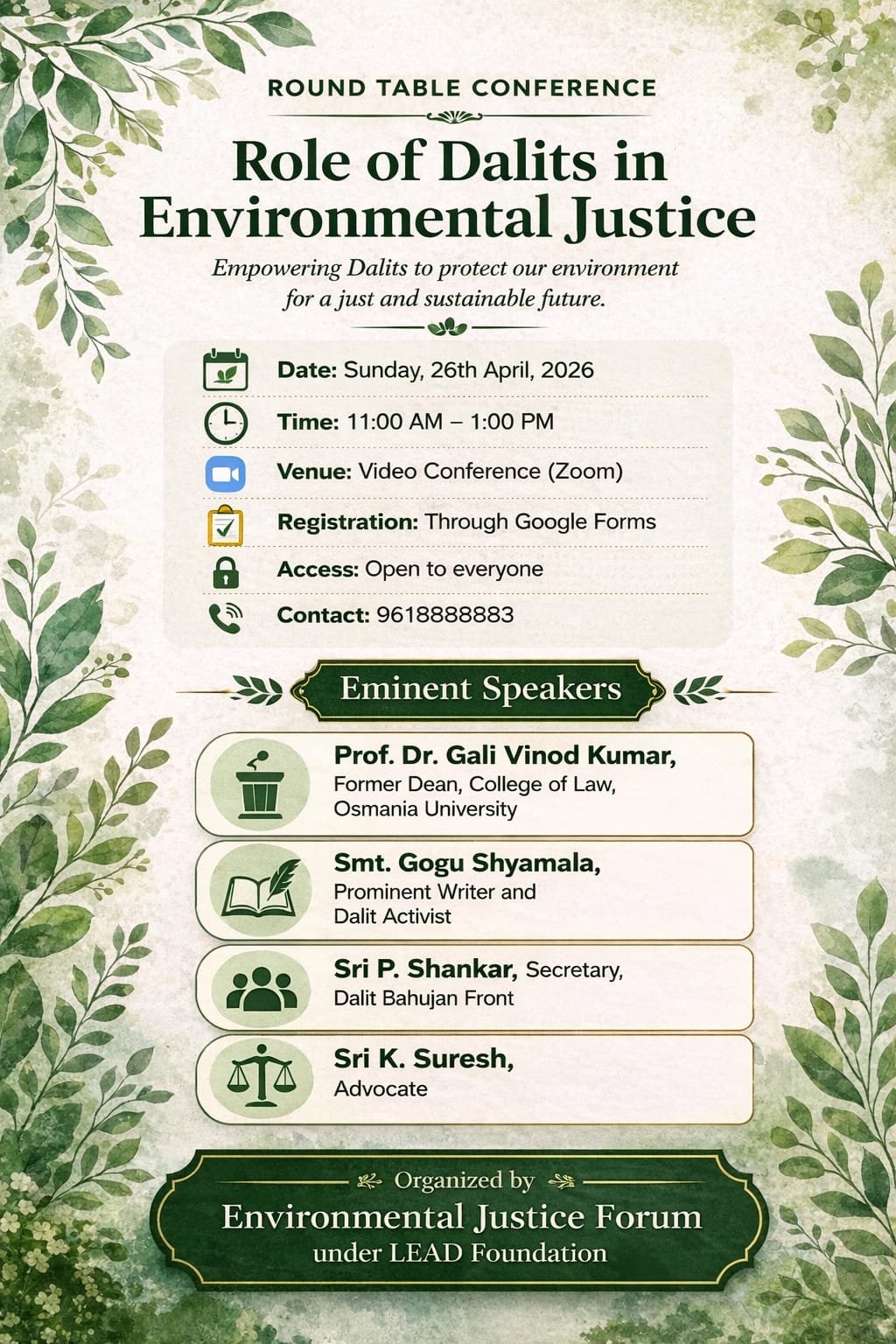
Environmental problems rarely have simple answers. EJF Roundtables create spaces for subject-matter experts, researchers, practitioners, students, activists, citizens and other interested participants to come together and discuss important environmental questions. The objective is not simply to create another discussion, but to create informed conversations where different perspectives and areas of expertise can contribute to a deeper understanding of an issue.

6
Roundtables conducted
6 Months
Time period
~25
Experts / speakers

What a Roundtable Explores

The Issue
What is happening and why does it matter?
The Evidence
What does available research and data tell us?
Different Perspectives
What do experts, practitioners, communities and other stakeholders see?
Possible Pathways
What can be done, and what questions require further research or action?
Explore Past Roundtables
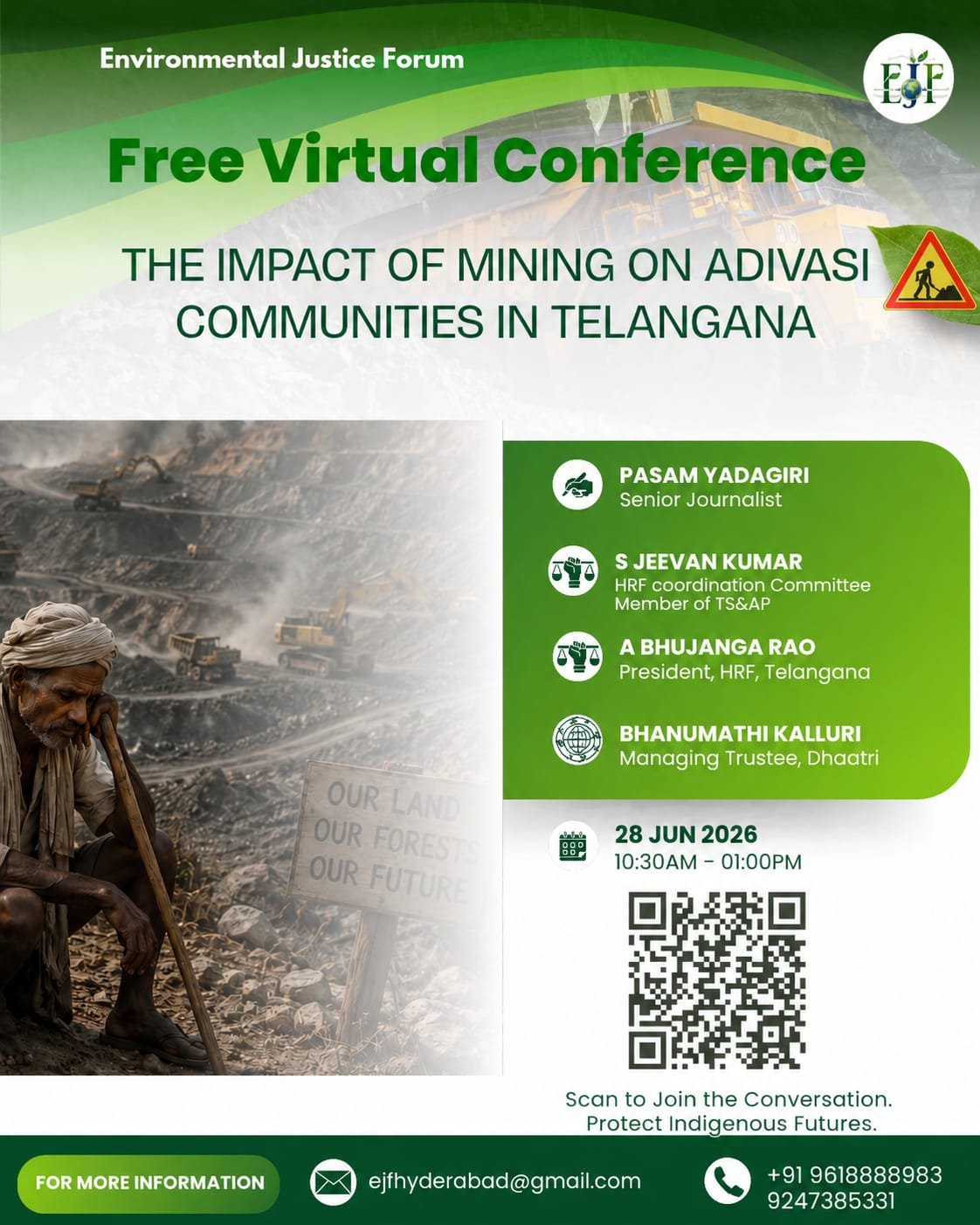
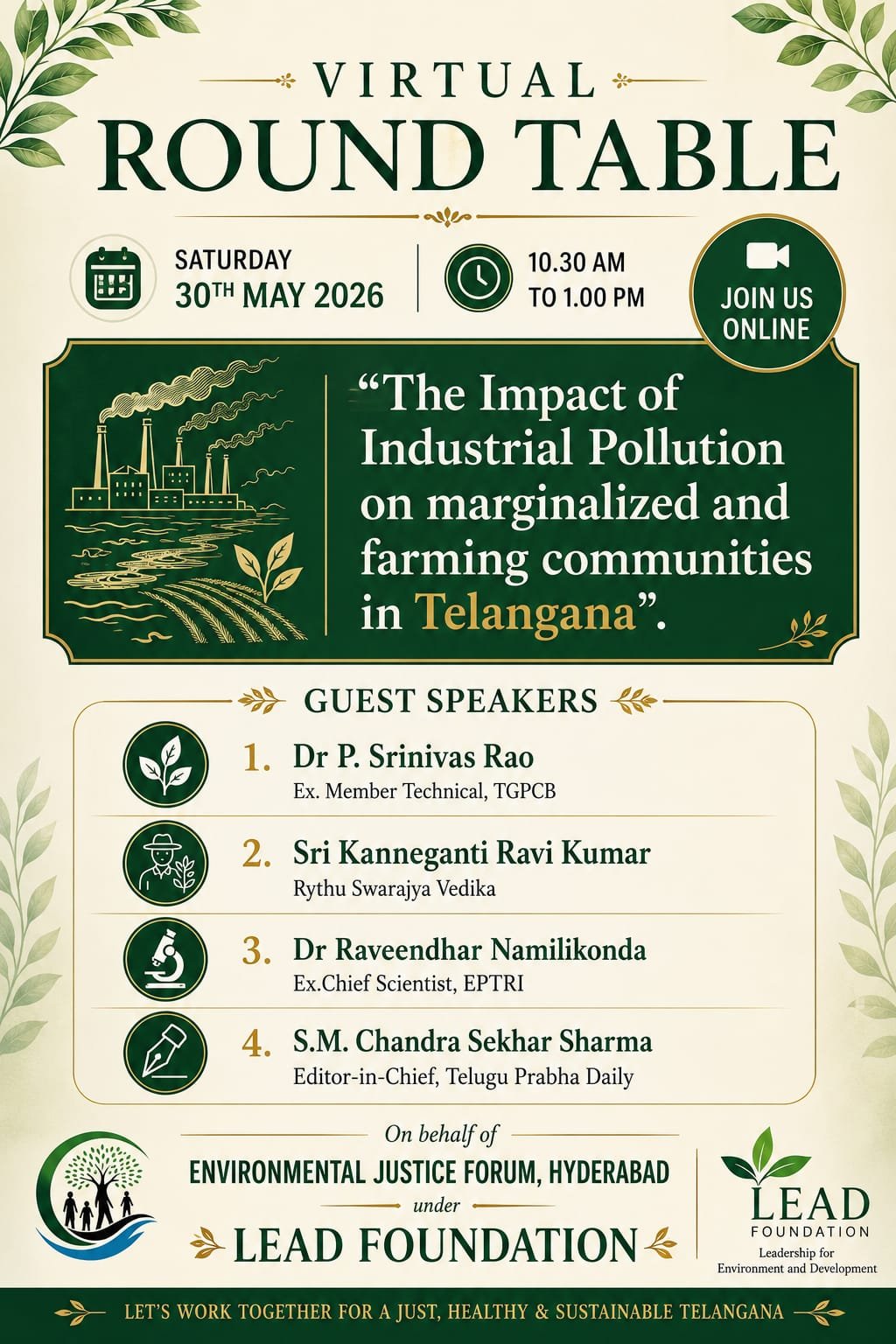
Past roundtables will be archived so that visitors can explore the discussions and resources generated through them. A few of our roundtable brochures:

Upcoming Roundtables — Join the conversation.

Upcoming EJF Roundtables will be announced through our Events section. Each event will include details about the topic, speakers, date, time and registration.

View Upcoming Events →
Be Part of the Work

Environmental change needs informed participation.

Whether you are a student, researcher, environmental expert, educator, citizen or institution, there are ways to engage with EJF.

Students & Young People
Learn, participate and contribute to environmental research and outreach.
Get Involved →
Experts & Researchers
Share knowledge, contribute to discussions and support evidence-based environmental work.
Connect With EJF →
Institutions
Collaborate with EJF on research, education, outreach and environmental initiatives.
Explore Collaborations →
Citizens
Understand environmental issues and participate in informed environmental action.
Explore Citizen Briefings →

Understand the issue. Join the conversation. Contribute to the action.

EJF is building spaces where environmental evidence, public participation and institutional engagement can come together.

Scroll to Top